
Teaching Reading Is Harder Than a Moon Landing—But the MORE Program Represents One Giant Leap
Insights from the 2025 READS Lab Summer Institute

A Moonshot for Reading Comprehension
Teaching reading is harder than rocket science.
That’s what READS Lab Principal Investigator James Kim learned as one of the 130 researchers on the Reading for Understanding (RfU) Research Initiative, a five-year project funded by the Institute of Education Sciences.
The initiative was built on an ambitious premise: if we can launch a man to the moon, surely we can design a research-driven roadmap for teaching all children to read for understanding. Leveraging the same model NASA used for the moon mission, RfU aimed to develop effective approaches for improving reading comprehension.
Yet despite the contributions from fields ranging from linguistics to developmental psychology, the project found that the gold standard of reading comprehension—transfer, or the ability to apply new skills and ideas across settings—”is, and likely always will be, a challenge to achieve.”
That challenge is precisely what the READS Lab continues to tackle. Its latest work, the ongoing development of the Model of Reading Engagement (MORE) program, at last shows real promise in helping students learn to transfer their knowledge.
A Lesson from Mister Rogers: The Power of Schemas
Following the wisdom of the beloved Mister Rogers, the program operates by focusing on the deep and simple, instead of the shallow and complex. Its foundation in schemas—or deeper, underlying structures of knowledge—enables students to find common ground between familiar and new ideas, accelerating their learning.
While the term may be new, people engage in schematic thinking every day.
Consider the diagram below:

Your brain probably jumped to fill in the letter B or the number 13. That’s because your mental schemas—like the alphabet or your understanding of numbers—give you “x-ray vision” to see through these boxes.
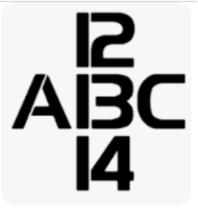
That’s what the MORE curriculum does for students—it builds mental frameworks and “homes for knowledge” to be stored in, so elementary school students can take knowledge from a science unit on how animals survive in the wild and a social studies unit what it takes to be an explorer, and apply it to understand how paleontologists study dinosaur extinction or how businesses survive in an economy.
And the program works. In its causal evaluation, a randomized control trial, the research team found that students who received MORE gained two and a half additional months of literacy learning over students who did not—and these effects persisted twenty-six months later. That’s a big difference for a six-week program to produce.
For decades, educators have been trying to reach the “reading moon.” In the constellation of education reforms, MORE is a rare bright spot with real trajectory.
We know MORE Works. But why?
How does MORE achieve its success? Comparing the MORE lessons to ELA lessons taught by the same teachers to the same students on the same days, the research team recently presented results that MORE uses more vocabulary than standard ELA classes—88 vocab words vs. 66. But even beyond the scripted curriculum, this brand new research—still yet to be published—hints that MORE brings out the best in teachers’ instruction.
- More Vocabulary Explanations
Vocabulary words are the kernels of knowledge that help students build schematic stories. In MORE lessons, both teachers and students give far more vocabulary explanations than in standard classes—by a factor of four and six respectively.
- More Vocabulary Connections
Connecting words together in vocabulary networks is also key for student learning. It teaches students which words “hang together”—as Kim often says, “You know a word by the company it keeps.” In a 30 minute lesson, teachers make about two more vocabulary connections on average in MORE than in ELA lessons (about 11 connections compared to a typical 9).

- More Time for Student Talk
In the standard classroom, teachers talk a lot and pause very little. Student talk is thus limited in both quality and quantity. By contrast, all students are engaged in a MORE classroom. With pair shares and structured discussion routines, students are not just hearing vocabulary—they’re using it. Students have more opportunities to speak, explain, and question, which deepens understanding and boosts retention.
- More Time for Student Thought
In MORE lessons, the researchers also found that teachers provided more silent “think time” than in their ELA lessons—from 0–8%, with a 2% average compared to 0% in typical ELA lessons. While the difference may seem small, it has real impact. Though think time has diminishing returns—after all, a lesson with 100% independent think time might not be expected to result in much student learning— every 2% increase in silent think time could predict a six point bump in Dynamic Indicators of Basic Early Literacy Skills (DIBELS) scores.
- More Cross-Disciplinary Connections
Words in MORE aren’t one-and-done—they show up across lessons, units, and even content areas. This intentional revisiting helps solidify vocabulary in long-term memory and supports transfer, the very skill RfU researchers found most elusive. In a world in which schools often lack formal social studies curricula and students often receive less devoted science and social studies class time than scheduled, the intentional interconnections between subjects can be extremely valuable literacy levers.
Teaching Reading in a Storm: Finding Simplicity in the Science of Schemas
Kim reflected that being an educator in 2025 can feel a bit like movie icon Forrest Gump’s experience weathering the monsoon season. As Gump famously said, “We've been through every kind of rain. Little bit of stinging rain, and big ol' fat rain. Rain that flew in sideways. And sometimes rain even seemed to come straight up from underneath.”
As the MORE program scales into new states and districts across the country this year, it offers an opportunity for teachers to come up for air, focusing not on the shallow and complex set of shifting standards, expectations, and policies that undergird reading education today like so much pelting rain, but instead on the deep and simple truths, like schemas, that make reading comprehension work.
In that sense, MORE is not just a small step forward in reading instruction—it may be the giant leap the field has been waiting for.