
Proving Ground
Proving Ground
Proving Ground works with school districts to help them identify and test solutions to specific challenges, such as chronic absenteeism, that are obstacles to student achievement.

Proving Ground supports partner districts in continuous improvement through data analysis, strategic advice, hands-on assistance, and peer networking opportunities. Through these diverse supports and strategic interactions, Proving Ground helps districts to:
- identify potential solutions to relevant issues,
- quickly and reliably assess the impact of their chosen solutions,
- act on evidence to continuously improve implementation; and,
- learn to use new and better evidence to make decisions about how to invest resources and improve student achievement
By joining a growing network of districts committed to addressing similar challenges, partners amplify their actionable insights and peer support.
Resources
Proving Ground works with partners on a range of focus areas, and you can find our resources below:
Engaging Families From a Distance
Engaging Families From a Distance
View the best practices for using strategic automated messaging to communicate from a distance.

Student User Profile
A resource that can be used to get to know your students, particularly in the case of designing student interventions.

Your child missed learning the alphabet today: A randomized trial of sending teacherwritten postcards home to reduce absences
This randomized trial evaluates the effectiveness of sending teacherwritten postcards home to reduce absences.

Reduce Absences in Early Grades with Personalized Postcards
Proving Ground built a series of guides to share lessons through successful interventions piloted by its member districts to decrease chronic absenteeism. This is a step-by-step guide for districts interested in implementing a postcard intervention to

Reduce Absences in Early Grades with Personalized Postcards: Technical Appendix
This technical appendix provides more detail about the methods and analytic approach outlined in the step-by-step guide.

The Uncertain Role of Educational Software in Accelerating Student Learning: Regression discontinuity evidence from three local education agencies
Educators must balance the needs of students who start the school year behind grade level with their obligation to teach grade-appropriate content to all students.

Exploring ST Math’s Implementation and Impact Exploring ST Math’s Implementation and Impact: Technical Appendix
These resources summarize the findings from analyses of 13 school systems across the country that implemented ST Math, a mathematics educational software program.

Improving Teacher’s Implementation of Educational Technology at Scale by “Nudging” Teachers with Usage Information
Proving Ground worked with partner districts to examine the impact of a low-cost, teacher-focused behavioral intervention on student-level usage of educational software in K-8, detailed in this CEPR Working Paper.

Case Studies
Approach
Proving Ground’s continuous improvement process helps our partners better understand their challenges by using evidence to rapidly identify and implement solutions that work for students, families, and schools.
Continuous Improvement Cycle
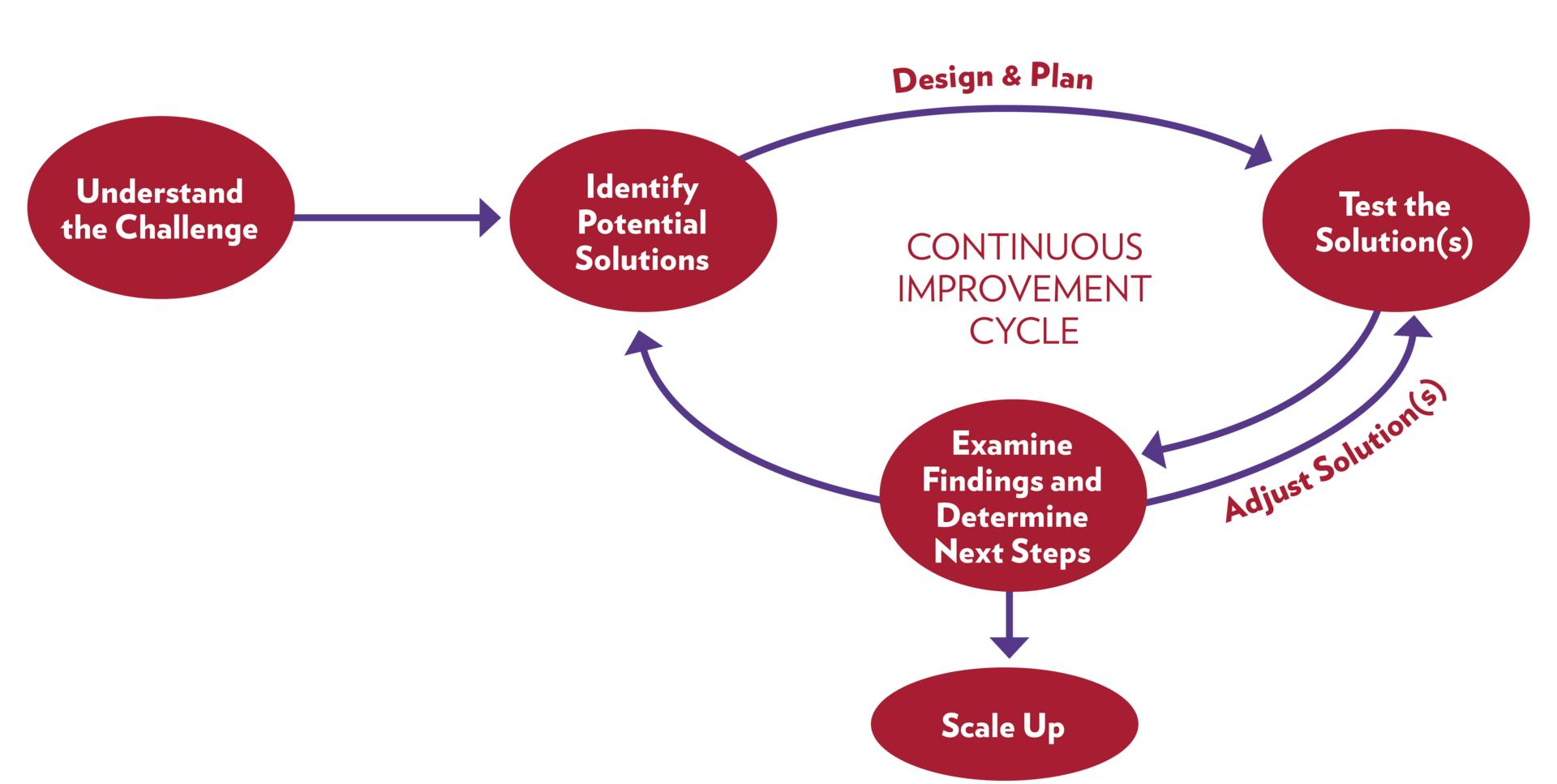
Understand the Challenge
We begin our work with each district by analyzing the district’s historical data and conducting interviews with district and school staff. Through this process, we help the district uncover key issues and trends that contribute to the challenge each district seeks to address.
Identify Potential Solutions
Proving Ground then leads each district through a process of uncovering the root causes of its challenges. We help the district identify potential solutions and work with the district’s leadership team to prioritize these solutions.
Test the Solution(s)
Proving Ground helps each district design and implement the solution(s) in a measurable way. During the testing phase, we provide reports on findings every six to eight weeks, depending on the solution being tested.
Examine Findings and Determine Next Steps
Proving Ground then works with each district to determine how to act on the findings. If the solution is producing the desired results, the district may decide to scale up. If the solution is underperforming, the district may decide to make adjustments and continue testing, or it may decide to stop implementation and try an entirely new solution.
Partner Testimonials
Partners
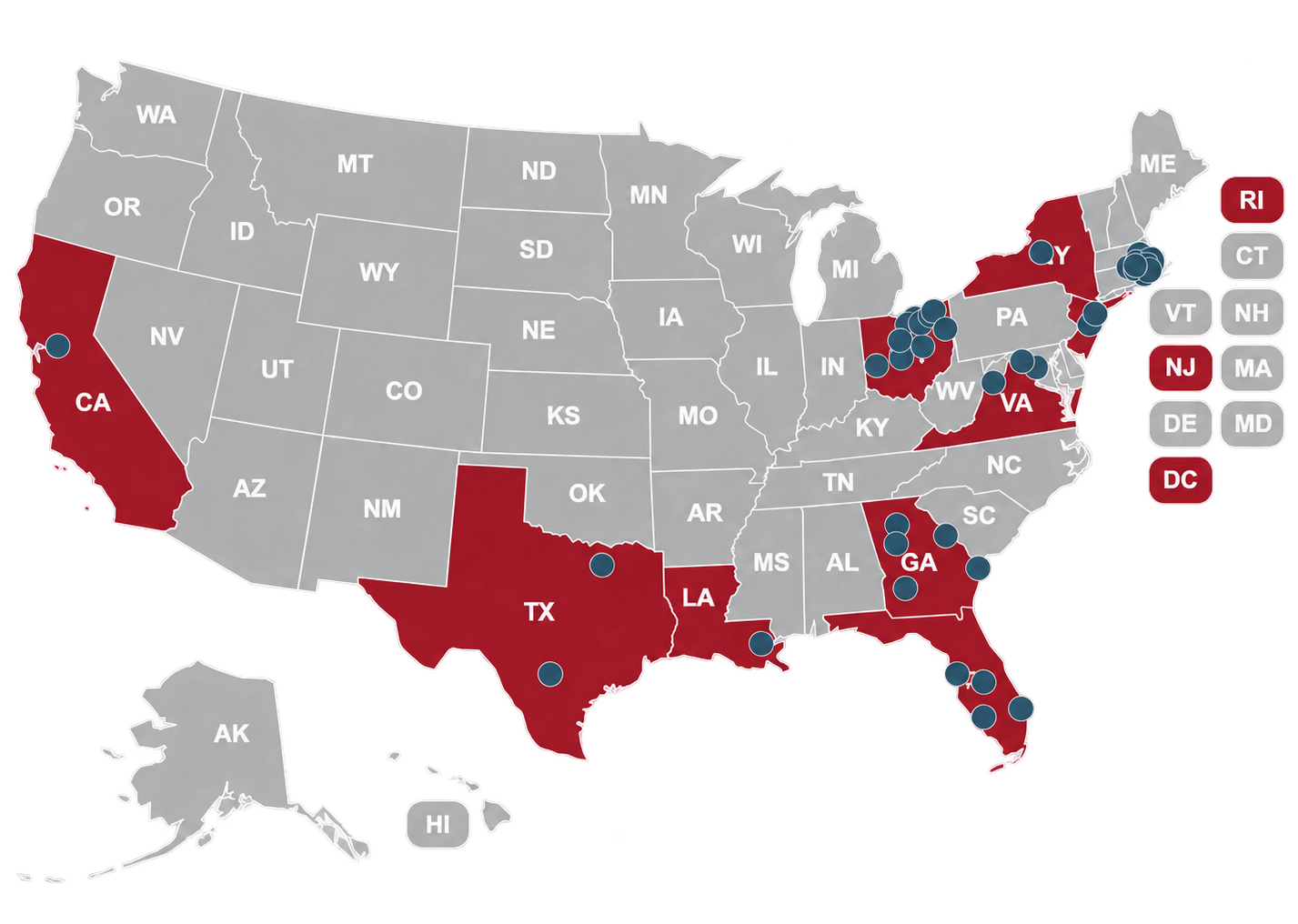
Since 2015, Proving Ground has worked with over 40 partners, serving close to one million students across the United States.
Proving Ground differs from our other researcher-practitioner partnerships in that many of them are focused on simply the efficacy of a particular program. Proving Ground answers that, but then says, ‘What are you going to do about it in an actionable way? And how can we leverage other partners across the country to really take your implementation to the next level?'
John Rice
District of Columbia Public Schools